
AIAC SPONSORS "INTO THE HEART OF THE DOOMSDAY GLACIER" AT THE EXPLORERS CLUB
FOR IMMEDIATE RELEASE
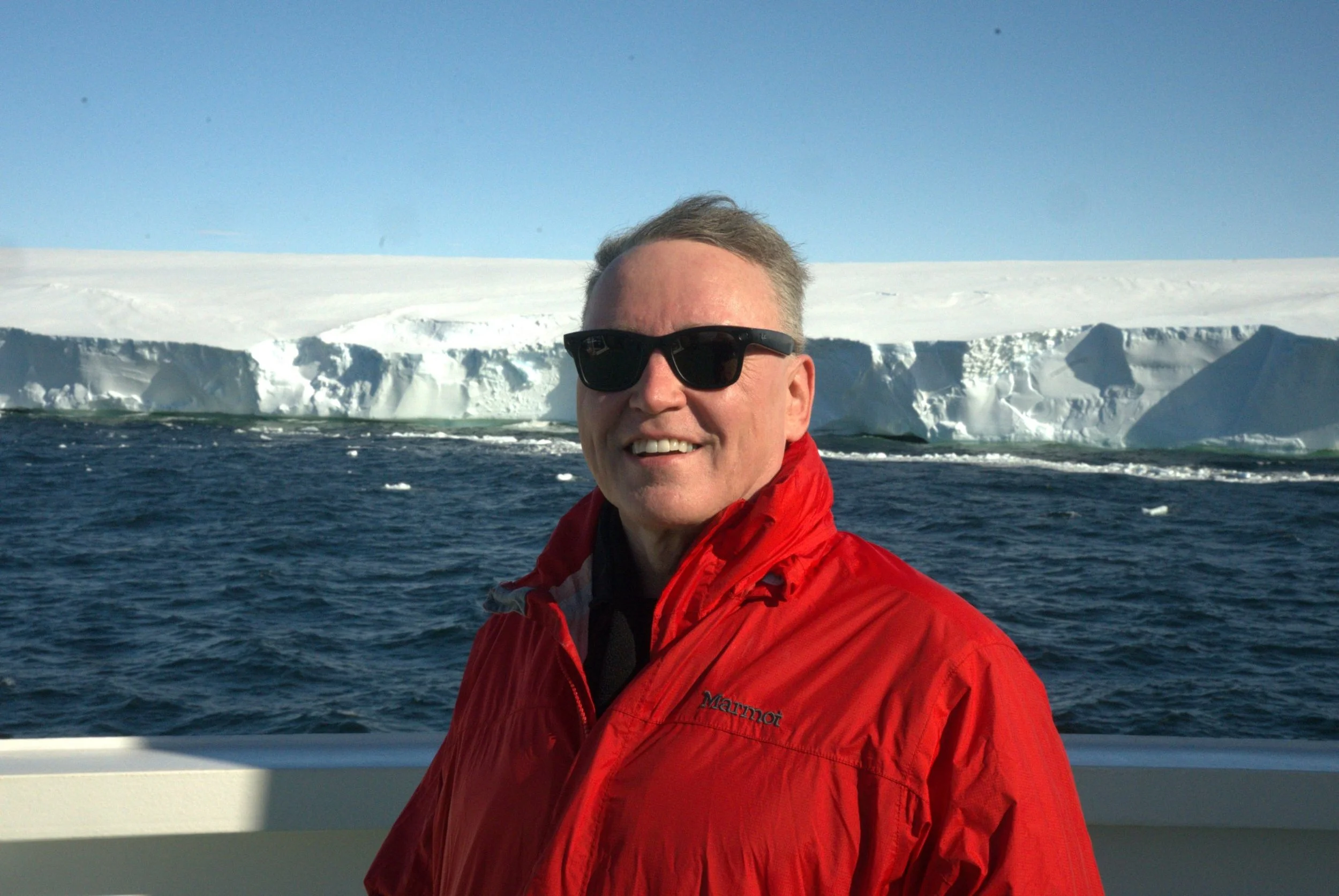
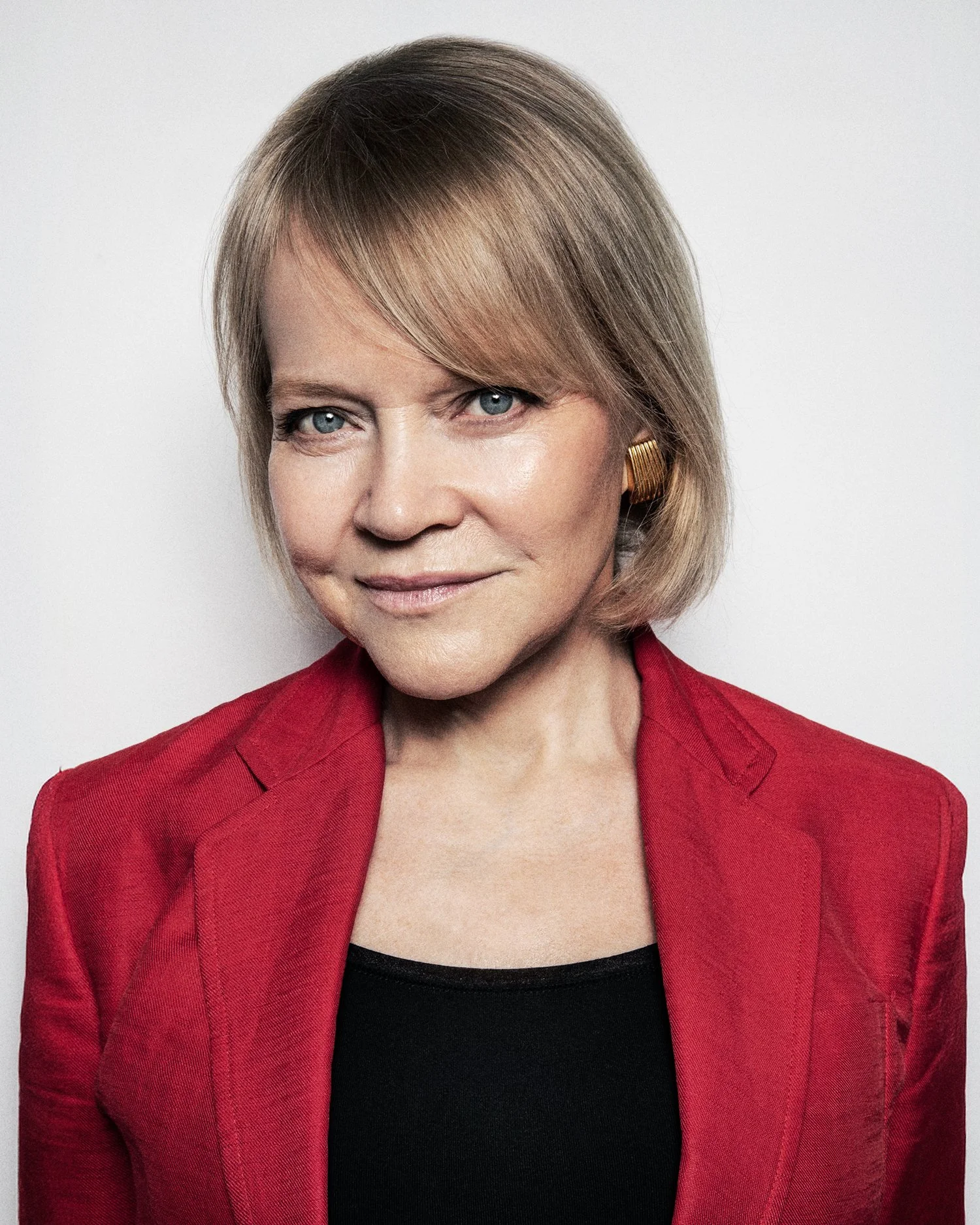
New York, NY - February 5, 2026 – American Industrial Acquisition Corporation (AIAC) shall sponsor "Into the Heart of the Doomsday Glacier," a landmark lecture, reception and dinner at The Explorers Club featuring Professor David Holland, one of the world's leading polar scientists, interviewed by Diane Brady, Editor-in-Chief of Fortune, on March 13, 2026.
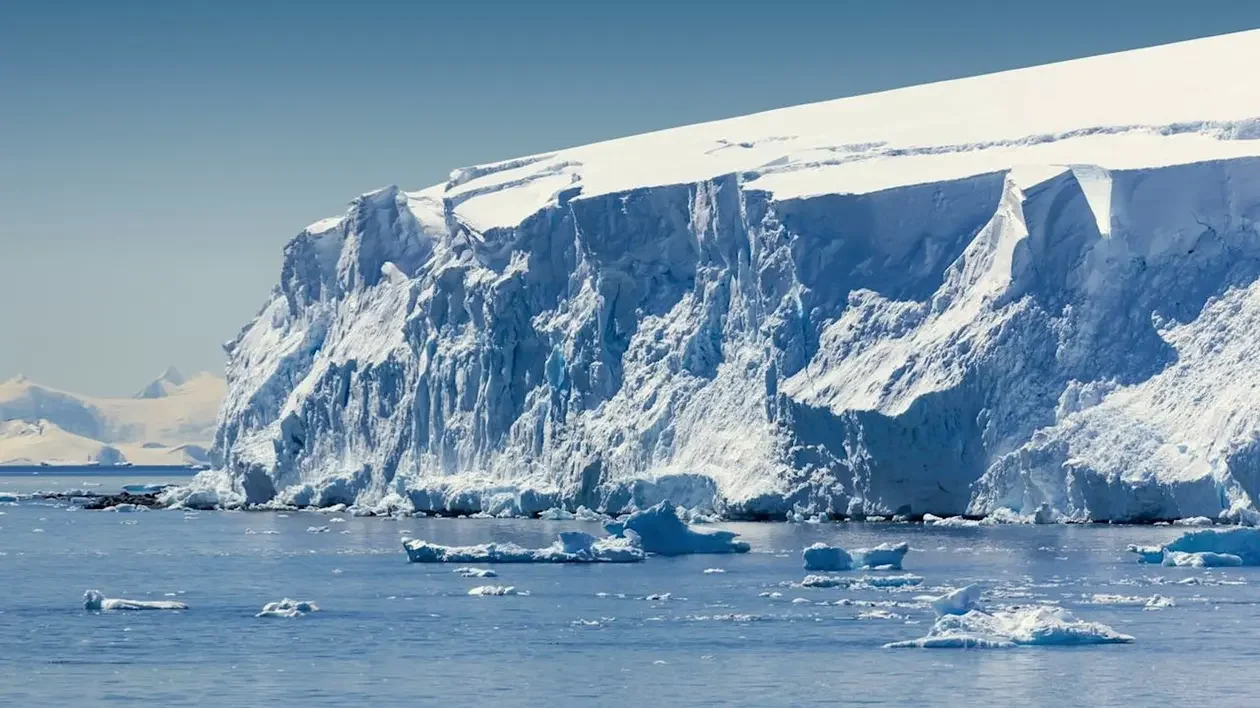
Co-hosted by the Seabed Curtain Project and UArctic, the program offers a rare, firsthand account of Professor Holland's recent expedition to the Thwaites Glacier in Antarctica's Amundsen Sea—one of the most consequential and rapidly changing places on Earth. Aboard the Korean icebreaker RV Araon, Holland and an international team pushed into remote waters where warm ocean currents are destabilizing the glacier from below, in a high-risk, high-reward mission to understand the future of global sea level rise.
Professor Holland will share new insights from this groundbreaking expedition: navigating shifting sea ice, deploying ocean instruments in brutal conditions, and collaborating with researchers racing to understand the fate of the glacier often called the "Doomsday Glacier"—a place whose future may shape coastlines for generations to come.
This in-person lecture at Explorers Club Headquarters will include gripping field stories, cutting-edge science, and a clear-eyed examination of the front lines of our changing planet, followed by an audience Q&A session.
Event Details:
Date:
Thursday, March 13, 2026
Time:
6:00 PM – Check-in and beer and wine reception
7:00 PM – Lecture begins
Location:
The Explorers Club Headquarters, New York, NY
Streaming:
Available on Facebook and YouTube
AIAC Chairman and Explorers Club Trustee, L. M. Levie, issued the following statement:
"AIAC is honored to sponsor and host Professor David Holland's presentation on his expedition to the Thwaites Glacier, the most critical scientific frontiers in our understanding of climate change and sea level rise. The courage and dedication required to conduct research in such extreme conditions exemplify the spirit of exploration that The Explorers Club has championed for over a century."
"As a diversified industrial corporation operating across six continents, AIAC recognizes our responsibility to support scientific inquiry that advances human understanding of our planet's most pressing environmental challenges. Professor Holland's work provides essential insights into phenomena that will affect coastlines, communities, and economies worldwide for generations to come."
"I am profoundly grateful to Professor Holland and his international team for their commitment to rigorous science under the most demanding conditions, and we look forward to continuing our support of exploration and research that serves the long-term interests of humanity and our planet. I salute, as well, my dear friends, Diane Brady, Editor-in-Chief at Fortune, Marianne Hagen, Executive Director at the Seabed Curtain Project, and Morgan Dulian, Executive Director of UArtic, for their relentless efforts to call attention to the most existentially important scientific mission in history. The stakes could not be higher and their devotion to this cause is extraordinary.”
AIAC Chairman, L. M. Levie, is a Member of the Board of Trustees of the Explorers Club and the Theodore Roosevelt Association. He is Fellow of the Royal Geographical Society and Member of the Summit Council of the Royal Canadian Geographical Society, the American Polar Society, the Heritage Society of the National Academy of Sciences, the President's Circle and the 1848 Society of the American Association for the Advancement of Science, the Minerva Society of the American Academy of Arts and Sciences, the Jane Goodall Institute's Circle of Hope, and the Alexander Graham Bell Legacy Society of the National Geographic Society.
About the Seabed Curtain Project
The Seabed Curtain Project is a groundbreaking climate intervention initiative led by the University of the Arctic (UArctic) that aims to slow catastrophic sea level rise by protecting vulnerable Antarctic and Greenlandic ice sheets from warm ocean waters. The project proposes installing massive flexible underwater curtains anchored to the seabed that would act as physical barriers to block warm, dense bottom waters from reaching and melting ice shelves from below.
Focused initially on Antarctica's Thwaites Glacier—known as the "Doomsday Glacier"—the project addresses one of the most urgent climate challenges facing humanity. Thwaites Glacier, roughly the size of Great Britain, currently contributes approximately 4% of global sea level rise annually. If it were to collapse completely, sea levels would rise by 65 centimeters, with devastating consequences for coastal communities worldwide.
The proposed seabed-anchored curtains would stretch approximately 50 miles (80 kilometers) across key sections of the continental shelf and stand roughly 150 meters (500 feet) tall. Unlike rigid dam structures, these flexible curtains would be anchored only at fixed points on the seafloor, allowing them to bend and deflect safely under the impact of moving icebergs while still blocking the warm water currents responsible for accelerated ice melt.
The Seabed Curtain Project brings together an international collaboration of scientists, engineers, and policy experts from institutions including Cambridge University, the University of Chicago, New York University, Dartmouth College, the Alfred Wegener Institute, the Norwegian Institute for Water Research (NIVA), Aker Solutions, and the Arctic Centre at the University of Lapland. Professor David Holland of New York University serves as a key scientific leader on the project, working alongside glaciologist and geo-engineer John Moore of the University of Lapland, who leads the UArctic Thematic Network on Frozen Arctic Conservation.
The project has secured funding from the Tom Wilhelmsen Foundation and Outlier Projects, a philanthropic organization created by former Meta chief technology officer Mike Schroepefer. Current research includes deploying underwater robots in the Pine Island Trough to gather critical data on water speed, temperature, and salinity—information essential for engineering design and feasibility assessments.
The three-year research program focuses on material selection, mooring design, and prototype testing, with plans to test a ten-meter prototype in a Norwegian fjord. While the full-scale Antarctic deployment would cost an estimated $50-100 billion in construction with $1-2 billion annually for maintenance, proponents argue this represents approximately $5-10 per person per year for the 200 million people projected to be displaced by coastal flooding—far less than the cost of defensive infrastructure like sea dikes.
The project operates from the principle that while reducing greenhouse gas emissions remains the primary solution to climate change, targeted interventions may be necessary to buy critical time as global decarbonization efforts take effect. The seabed curtain strategy does not aim to stop climate change but rather to slow the rate of ice loss at the world's most vulnerable glaciers, potentially preventing or delaying meters of global sea level rise.
For further information, please see:
About the University of the Arctic (UArctic)
The University of the Arctic (UArctic) is a cooperative network of nearly 200 universities, colleges, research institutes, and other organizations concerned with education and research in and about the North. Launched by the Arctic Council in 2001 in Rovaniemi, Finland, UArctic represents one of the world's largest international education and research networks, encompassing institutions from all eight Arctic nations as well as partners from non-Arctic countries worldwide.
UArctic's mission is to develop knowledge that addresses local and global challenges of relevance to Arctic peoples and societies by providing unique educational, research, and innovation opportunities through collaboration within its powerful network of member institutions. As a "university without walls," UArctic is committed to reducing barriers to cooperation across borders, cultures, and academic systems while embracing transparency, openness, and the principles of sustainable development.
The network builds and strengthens collective resources and collaborative infrastructure that enable member institutions to better serve their constituents and regions. Through cooperation in education, research, and outreach, UArctic enhances human capacity in the North, promotes viable communities and sustainable economies, and forges global partnerships.
UArctic promotes northern voices and a circumpolar worldview while embracing cultural diversity, language plurality, and gender equality. The organization is particularly committed to respecting and elevating the perspectives and knowledge of northern Indigenous peoples, supporting participatory approaches to knowledge production and sharing.
The network operates through Thematic Networks and Institutes that engage in scientific research, education, networking, and outreach activities. These Thematic Networks serve as the primary means of cooperation between member institutions and their faculty and researchers, fostering issues-based collaboration that is both focused and flexible enough to respond quickly to topical Arctic issues. The Seabed Curtain Project operates under UArctic's Thematic Network on Frozen Arctic Conservation.
UArctic also manages the north2north student mobility program, the only international exchange program offering academic opportunities in each Arctic nation, and provides decision-makers with knowledge-based advice supporting sustainable development in the Arctic region. The organization holds observer status at the Arctic Council and is constituted as an international non-profit association registered in Finland.
For further information, please see:
About Professor David Holland
Professor David Holland is a leading polar scientist and mathematician whose groundbreaking research on ice-ocean interactions has fundamentally advanced our understanding of climate change and sea level rise. He is a professor of mathematics and atmosphere/ocean science at New York University's Courant Institute of Mathematical Sciences, director of the Environmental Fluid Dynamics Laboratory (EFDL) in New York City, and director of the Center for Sea Level Change at New York University Abu Dhabi.
Holland's research focuses on the computer modeling of interactions between Earth's ice sheets and ocean waters, with particular emphasis on understanding how warming ocean currents accelerate glacier melt from below. As a lead Principal Investigator on the international MELT project, he and his team measure melting at critical glacier ice-ocean interfaces to understand the physical processes involved and assess their potential for triggering increased sea level rise.
Most recently, Professor Holland led a high-risk expedition aboard the Korean icebreaker RV Araon into the treacherous waters of Antarctica's Amundsen Sea, deploying sophisticated ocean instruments in brutal conditions to study how warm waters are destabilizing the Thwaites Glacier—often called the "Doomsday Glacier"—from below. His hands-on approach to polar science combines rigorous mathematical modeling with direct observational data collection in some of Earth's most remote and dangerous locations.
Holland is also deeply engaged in the Seabed Curtain Project, an ambitious international collaboration exploring whether large-scale engineering interventions might slow the collapse of vulnerable ice sheets. During his recent expedition, his team deployed underwater robots to gather precise oceanographic data needed to determine whether flexible underwater barriers could block warm currents from reaching critical glaciers.
After making eight expeditions to Thwaites Glacier and witnessing firsthand the accelerating pace of change, Holland has come to view proposals like the seabed curtain not as alternatives to emissions reduction but as potential emergency measures to buy time as the world transitions away from fossil fuels. His work represents the intersection of mathematical rigor, engineering innovation, and profound concern for humanity's future in the face of one of the most consequential environmental challenges of the 21st century.
For further information, please see:
https://cims.nyu.edu/people/profiles/HOLLAND_David.html
https://en.wikipedia.org/wiki/David_M._Holland
About Diane Brady
Diane Brady is Editor-in-Chief of Fortune magazine, one of the world's most influential and longest-running business publications. Under her editorial leadership, Fortune continues its nearly century-long legacy of authoritative reporting on global business, finance, technology, and leadership, while expanding its coverage to address the most critical issues facing corporations and society in the 21st century.
Brady brings decades of distinguished experience in business journalism to her role at Fortune. She previously served in senior editorial roles at Bloomberg Businessweek, where she led coverage of some of the most significant business stories of the modern era and developed a reputation for incisive analysis of corporate strategy, leadership dynamics, and the evolving role of business in addressing global challenges.
An intrepid traveler and keen observer of global trends, Brady has reported from some of the world's most remote and consequential locations, including the Arctic, where she has witnessed firsthand the dramatic effects of climate change on polar environments. These on-the-ground experiences have deepened her understanding of the urgent environmental challenges facing our planet and informed her editorial approach to covering climate science, energy transition, and corporate environmental responsibility.
Known for her penetrating interviews with CEOs, investors, and thought leaders, Brady has established herself as one of the most respected voices in business media. Her work explores the complex intersection of capitalism, innovation, and social responsibility—examining how companies and their leaders navigate transformation, technological disruption, and the increasing expectations that businesses serve stakeholders beyond shareholders alone. Her editorial vision has helped shape Fortune's coverage of climate change, energy transition, technological resilience, and the future of work—topics that align closely with the critical challenges being addressed by explorers, scientists, and business leaders working at the frontiers of human knowledge and environmental understanding.
For further information, please see:
https://en.wikipedia.org/wiki/David_M._Holland
About American Industrial Acquisition Corporation
American Industrial Acquisition Corporation (AIAC) is a diversified industrial group with manufacturing and distribution sites in 24 countries in North America, Europe, Africa, Asia, and Australia-New Zealand. AIAC has acquired and grown non-core subsidiaries and divisions of Boeing, Siemens, Lockheed Martin, Northrop Grumman, Raytheon, Johnson Controls, Merck, Pfizer, Astellas, Visteon, Carlyle, Ahlstrom, Tolko, Groupe Suez, Groupe Rexel, and many other leading multinational corporations.
AIAC companies serve companies and governmental entities worldwide in all major sectors, including aviation, space, defense, automotive, truck, rail, marine, petrochemical, solar, nuclear, food, confectionary, beverage, civil engineering and infrastructure, commercial construction, mining, dredging, disaster relief, education, medical devices, and pharmaceuticals. In addition, AIAC companies are exclusive, authorized distributors of leading branded industrial and consumer products and serve as critical suppliers for the construction of major airports, schools, hospitals, performing arts and sports centers, offices and hotels throughout Southeast Asia, Australia, and New Zealand. AIAC is a leading manufacturer of building, street, and highway signage in Europe, and a distributor of electrical products throughout France.
Of note, AIAC purchased Boeing Canada in 2005 and has produced over 10,000 unique components for every Boeing jet plane ever since, reliably serving Boeing from manufacturing facilities in North America. A leader in ultra-high precision jet engine component manufacturing, AIAC companies produce 2,200 fan blades for each jet engine produced by GE, Pratt & Whitney, Rolls Royce, and Honeywell.
AIAC companies actively support exploration into outer space, manufacturing critical components for launching and propelling spacecraft and satellites. AIAC customers in this sector include NASA, the European Space Agency, SpaceX, Blue Origin, and Boeing. research. AIAC affiliate, Champlain Cable Corporation, supported the Mercury, Gemini, and Apollo space missions with high performance wire and cable. AIAC companies also lead in the design and manufacture of undersea umbilical cables for worldwide oceanographic research.
AIAC companies produce the critical automotive wire and cable for Tesla, GM, Ford, Chrysler-Fiat, Toyota, and Nissan. In connection with its kraft paper manufacturing interests in Canada and the US, AIAC controls and sustainably manages 22 million acres of Manitoba, Canada forestland, an area equivalent in size to the nation of Hungary.
AIAC affiliate, Metallwarenfabrik Gemmingen GmbH, located in Germany, designs, manufactures and distributes high performance, emergency portable power generators utilized in global conflict zones and during natural disasters.
For further information, please see:
About AIAC Philanthropy
AIAC and the AIAC Foundation support a wide range of nonprofit, nonsectarian, bipartisan organizations which promote international conflict resolution, disaster relief, economic development, environmental sustainability, exploration, and the performing arts.
The exploration-focused nonprofit organizations which they actively support include The Explorers Club, the National Geographic Society, the Royal Geographical Society, the American Museum of Natural History and the Hayden Planetarium, the Victoria & Albert Museum, the National Air and Space Museum, the National Space Society, and the United States Space Foundation.
AIAC's other beneficiaries include the Appeal of the Nobel Peace Laureates Foundation Inc., the Asia Society, the Atlantic Council, the Bill and Melinda Gates Foundation - Gates Philanthropy Partners, the Bretton Woods Committee, the Carnegie Endowment for International Peace, the Carter Center, the Council on Foreign Relations, the Foreign Policy Association, the Institut Française des Relations Internationales, the International Committee of the Red Cross, the International Crisis Group, the International Rescue Committee, the Japan Society, the JFK School of Government of Harvard University, the Peterson Institute for International Economics, the Richardson Center for Global Engagement, the Royal Institute of International Affairs (Chatham House), the Sierra Club, the Trilateral Commission, and the Yale Chief Executive Leadership Institute.
For further information, please see:
https://www.aiac.com/our-values
About The Explorers Club
Founded in 1904, The Explorers Club is a prestigious international multidisciplinary professional society dedicated to the advancement of field research and the ideal that it is vital to preserve the instinct to explore. Based at its historic headquarters in New York City, the Club has served as a meeting point and unifying force for explorers and scientists worldwide for over a century.
The Club's membership includes many of history's most renowned explorers and scientists, from polar explorers Robert Peary and Roald Amundsen to oceanic pioneers Jacques Cousteau and Robert Ballard, from aviation legends Charles Lindbergh and Amelia Earhart to space pioneers like Neil Armstrong, Buzz Aldrin, and Jim Lovell. The Club continues to support cutting-edge exploration in every realm—from the deepest ocean trenches to the highest peaks, from archaeological discoveries to space missions.
The Explorers Club is renowned for its rigorous standards of membership, requiring nominees to have made significant contributions to exploration or the sciences that advance our understanding of the world. The Club's Board of Trustees, Legacy Society, and various committees work to preserve the Club's mission while fostering new generations of explorers through grants, expeditions, and educational programs.
The Club's famous annual dinner, featuring exotic cuisine and presentations by leading explorers, has become legendary in New York society. More importantly, The Explorers Club continues to fund and support expeditions that push the boundaries of human knowledge, from climate research in Antarctica to biodiversity studies in remote rainforests to preparations for future Mars missions.
AIAC Chairman L. M. Levie serves as Member of its Board of Trustees and as Poet Laureate and Member of its Legacy Society. As Poet Laureate, Mr. Levie contributes to the Club's cultural mission by capturing the spirit of exploration through verse, honoring both historical achievements and contemporary discoveries that continue to expand the frontiers of human knowledge and experience.
For further information, please see:
Media Contact:
Isabel Carro-Toro, Vice President
American Industrial Acquisition Corporation
+34 689 295 827 (Spain)
+1 787 244 3175 (USA)
icarro-toro@aiac.com